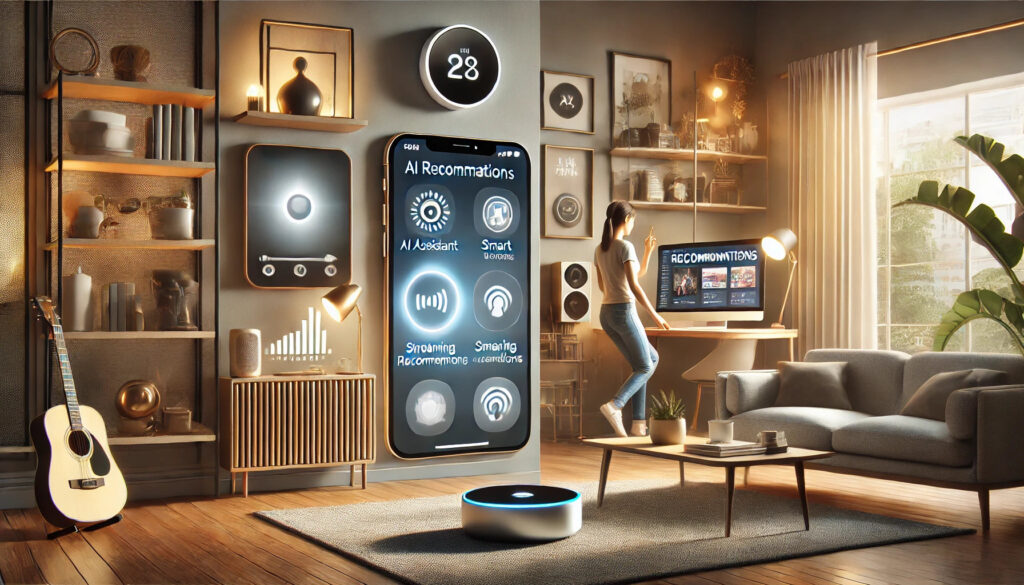
You probably interacted with artificial intelligence before you finished your morning coffee today. If that sounds dramatic, consider what “morning” looks like now: your phone’s alarm went off at a time calculated to wake you during light sleep. You scrolled through a social media feed curated by algorithms that know your interests better than some of your friends do. You asked a voice assistant about the weather. You got navigation suggestions for your commute that accounted for an accident you didn’t know about yet.
None of this feels particularly futuristic anymore. That’s the strange thing about AI in daily life—it’s simultaneously everywhere and invisible. We’ve stopped noticing it the same way we stopped noticing that our phones are more powerful than the computers that sent people to the moon.
The AI You Don’t Think About
The most pervasive AI in our lives isn’t the stuff that makes headlines. It’s the quiet background systems that have become so integrated into daily routines that we only notice them when they fail.
Take email spam filtering. Remember when your inbox was an unusable mess of viagra ads and Nigerian prince scams? Machine learning systems now catch 99% of spam before you see it, constantly adapting to new tactics from spammers. It’s such an effective, invisible solution that most people under 25 have never experienced the chaos of unfiltered email.
Or consider autocorrect and predictive text. Yes, it sometimes creates embarrassing mistakes, but think about how much faster you type on a phone compared to the old flip phone days of pressing buttons multiple times per letter. The AI doesn’t just correct obvious typos—it learns your personal writing patterns, your frequently used phrases, even your tendency to fat-finger certain letter combinations.
Photo organization is another example. Your phone can find pictures of your dog, your car, or that restaurant you went to last summer even though you never tagged any of them. It recognizes faces, objects, locations, and scenes without you doing anything. A decade ago, this would have seemed like science fiction. Now it’s just… how photos work.
The Recommendations Running Your Life
The most obvious AI in daily life, and possibly the most influential, is recommendation algorithms. Netflix suggesting what to watch. Spotify building your personalized playlists. Amazon showing you products you didn’t know you wanted. TikTok creating an endlessly scrolling feed that seems to understand your sense of humor.
These systems are doing something subtle and powerful: they’re learning your preferences better than you probably articulate them yourself. You might say you like action movies, but your actual viewing behavior reveals you prefer character-driven action with strong female leads and avoid anything with excessive CGI. The algorithm picks up on patterns you might not consciously recognize.
This creates a strange feedback loop. The more you use these services, the better they get at predicting what you’ll like, which makes you use them more, which gives them more data to improve their predictions. It’s convenient and slightly unsettling at the same time.
The concern isn’t that these systems work poorly—it’s that they work too well. When AI curates everything from your news feed to your music to your dating prospects, you end up in an increasingly personalized bubble. You see content that confirms your existing interests and biases. The algorithm optimizes for engagement, not for exposing you to challenging ideas or diverse perspectives.
AI in Your Pocket
Smartphones are basically AI delivery devices at this point. Voice assistants like Siri, Google Assistant, and Alexa use natural language processing to understand your questions and speech recognition to transcribe your words. These technologies have improved dramatically—remember when voice recognition was basically useless? Now it works well enough that many people routinely dictate texts while driving or cooking.
Camera apps use AI in ways most users don’t fully appreciate. That “portrait mode” that blurs the background? AI is analyzing the image in real-time, identifying the subject, and creating artificial depth of field. Night mode uses machine learning to combine multiple exposures and reduce noise. Some phones even use AI to identify what you’re photographing—food, sunset, text document—and automatically adjust settings accordingly.
Translation apps have become genuinely useful. Point your camera at a sign in another language and see it translated in real-time, overlaid on your screen. Have a conversation with someone who speaks a different language with your phone mediating in real-time. It’s not perfect, but it’s functional in ways that seemed impossible just a few years ago.
The Smart Home Creep
Home automation has gone from expensive novelty to mainstream convenience, powered largely by AI learning your patterns. Smart thermostats learn when you’re typically home and adjust temperature accordingly. Smart lights can sync with your sleep schedule. Security cameras use computer vision to distinguish between a person, a pet, and a branch blowing in the wind.
The effectiveness of these systems depends on how much data you’re comfortable sharing. A smart home that knows your schedule, your preferences, your routines can make your life genuinely more convenient. But that knowledge exists on corporate servers, raises privacy questions, and creates potential security vulnerabilities.
Some people embrace this trade-off enthusiastically. Others find it creepy. Most of us land somewhere in the middle, selectively adopting smart home features that provide clear value while remaining vaguely uncomfortable about the broader implications.
Health and Fitness Tracking
Fitness trackers and smartwatches use AI to analyze your movement patterns, heart rate, sleep quality, and activity levels. These devices don’t just collect data—they interpret it, spotting patterns and anomalies that might indicate health issues.
Your watch might notice your resting heart rate has been elevated for several days and suggest you’re overtraining or getting sick. Sleep tracking apps analyze your movement and heart rate to determine sleep stages and quality. Some devices can detect irregular heart rhythms and have literally saved lives by alerting users to seek medical attention.
The accuracy isn’t perfect—these are consumer devices, not medical equipment—but they’re good enough to provide useful insights for most people. The AI learns what’s normal for you specifically, making personalized recommendations rather than generic advice.
Shopping and Commerce
Every online shopping experience now involves AI. Dynamic pricing adjusts costs based on demand, your browsing history, and what competitors are charging. Product recommendations suggest items based on your purchases and those of people with similar buying patterns. Visual search lets you upload a photo and find similar products.
Even physical retail is getting smarter. Some stores use computer vision to track inventory on shelves, alerting staff when items need restocking. Others analyze traffic patterns to optimize store layouts. Amazon’s cashierless stores use an array of sensors and AI to track what you take and charge you automatically.
The line between helpful and manipulative can be blurry. Is the AI serving you by showing relevant products, or is it manipulating you into buying things you don’t need? Probably both.
The Mundane Revolution
What’s striking about AI in daily life isn’t the flashy capabilities but how ordinary it’s become. A technology that can recognize faces, understand speech, predict preferences, and navigate complex environments has become background infrastructure.
This normalization happened quickly. Features that amazed us three years ago are now expected. Apps that don’t offer smart suggestions feel outdated. Services that can’t personalize experiences seem primitive.
We’ve crossed a threshold where AI isn’t a special feature—it’s a basic expectation. The question isn’t whether you use AI in daily life. You do, constantly, whether you think about it or not. The more interesting question is whether we’re thoughtful about which AI conveniences we adopt, what data we’re comfortable sharing, and how these systems are shaping our behaviors and choices in ways we might not fully recognize.
The AI revolution isn’t coming. It’s already here, making your coffee routine slightly more convenient and your digital life significantly more personalized. For better and worse, this is just how things work now.